Wednesday, August 23, 2017

The difference between G652,G657A,G655 and G654

Optical fiber incudling some kinds of types, I was in a mess when checking goods.It took a long time to check it out, and afraid to make mistake. In order to make customers to learn more about the optical cable, briefly summarize the difference between common optical cables.
Optical cables are made to meet the optical, mechanical or environmental performance specifications.It is a communication cable assembly that can be used individually or in group. Active Optical cable is the main transmission tool of various information network in the society.
Optical cable is consist of core, coating and jacket.
Core: Higher refractive index, for transmitting light;
Coating: Lower refractive index, form a total reflection condition with core;
Jacket: High strength, can bear greater impact, protect optical fiber.

Common optical fiber and differences:

G652: Standard single mode fiber, zero dispersion point is in 1300nm,divides into G652A,B,C,D.The main difference is PMD. It’s feature is that the fiber dispersion is very small when working wavelength is 1300nm, the transmission distance of the system is only limited by the loss;
G657A: Available in D, E, S, C and L5 wavebands. It can work in the whole working wavelength range of 1260-1625nm. With excellent bending performance and the technical requirements of geometric size are more accurate;
G655: Non zero dispersion-shifted fiber (NZ-DSF) contains 655A,B,C; The main characteristic is that the dispersion of 1550nm is close to zero, but not zero. It is an improved dispersion-shifted fiber to suppress four-wave mixing;
G654:Ultra low loss optical fiber, mainly used for transoceanic optical cable. The common core is pure SiO2,while the ordinary ones need to be doped with germanium. The loss near 1550nm is minimum, only 0.185dB/km, the dispersion is relatively large,a bout 17~20 ps/(nm·km), But the dispersion is zero in the 1300nm wavelength region.
We can see from above that their difference on fiber types, dispersion and loss .
Learn more about the product information, welcome to visit our website,we will update the blog every week.www.etulinktechnology.com.

Sunday, August 6, 2017

Types of coin operated game machine

It’s very usual to find coin-operated machines nowadays.And you need to identify a good game which contains your favorite parts.After inserting coins you will enjoy a lot of entertainment.
There are many different types of game machines but the common ones are:
Pinball

In 1931,the first coin-operated pinball was founded.Even though they are not similar as today’s,the function is the same.
Decorated with a lot of LCD lights and electronic scoring,the pinball machine is attractive.After put in a coin,you will get a ball to start the game.When the ball bounces off an item in the game you will get points then to exchange for prizes.
Claw machines
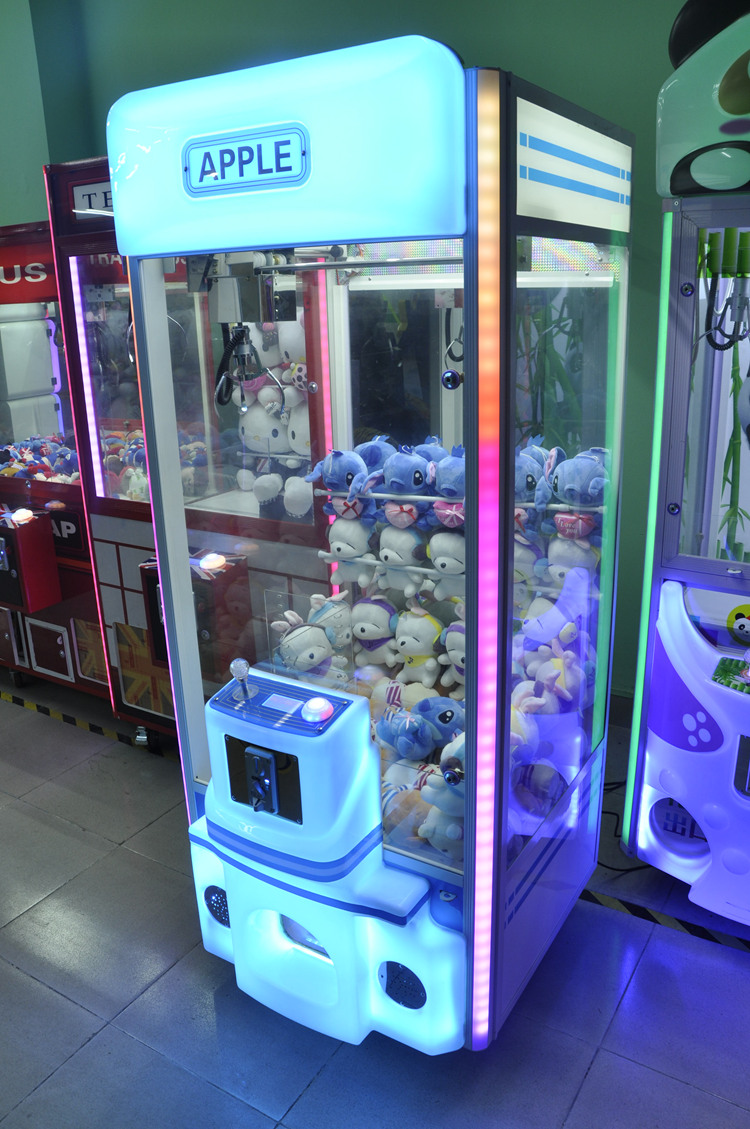
Operation site of claw machine would be anywhere in the city,restaurants,cinema,shopping mall etc.The instruction is simple,move the joystick to the position of prize you desired then press the buttons to catch the toys! If you have centered the claw perfectly,you will win the toy at a low price!Nowadays there are many other different ways to play claw machine.Like motion control with your hand then you don’t even need the joystick and button!

Redemption game machine

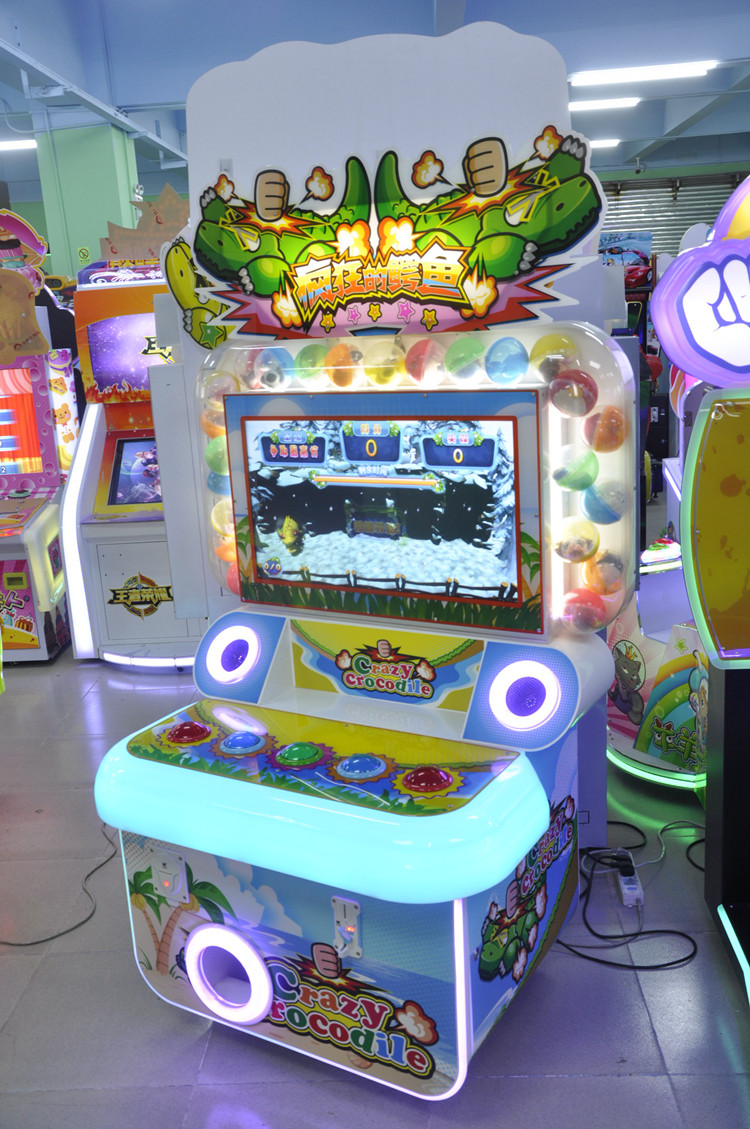
Redemption games are typically arcade games of skill that reward the player proportionally to their score in the game. The reward most often comes in the form of tickets, with more tickets being awarded for higher scores. These tickets can then be redeemed (hence the name) at a central location for prizes.

Simulators
Normally there are car racing simulator and shooting simulator.Famous game like super bike II,Out run,Aliens,Initial D are very exciting and realistic.Teenagers would love to spend an afternoon in playing this!
There are some of the most common coin-operated game machines.When buying game machines remember to find a reliable and good quality supplier like Noqi Technology game machine manufacturer.
Related reading:claw machine game for sale cheap claw machines

Friday, November 4, 2016

6 Good Reasons Why You Need High-Quality Translation Service

Having decided to go for Chinese translation is a good start. Next step would be determined: what to translate and how well it’s going to be. Not all materials should be treated equally. For high-value materials, you would definitely need high-quality translation service. Translation is critical in determining whether you’ll have high ROI or not. In reality, you get what you pay for.

What happens when you work with high quality translation service provider? You will:
    Establish yourself as a quality brand; a credible source and reliable figure by building your local market through clear communication.
    Level up professionalism and your communication with local customers and partners, by capturing every nuance of the language, with superior clarity.
    Bring positive experience and unleash your productivity by focusing on business activities that bring you most value – connect with your customers and get more sales.
    Save your time.
    Save your money, and
    Minimize misunderstandings and your stress level.

Beware of poor translations
Poor translation is a waste of your time, money, and all the combined efforts. It causes confusion and dissatisfaction and hurts your business like nothing else. Unwary customers always find them facing following dilemma:

    Let poor translation go public, it usually causes confusion, poor user experience, distrust, financial loss and even lawsuits. Not to mention it immediately hurts your brand and reputation that you worked so hard to establish.
    Discard poor translation and order a re-do, you are going to miss critical timeline, longer time to market, fail to keep your promise to a customer, and witness an increase the cost. Not to mention your stress level is extremely high.

Contact us now for a reasonable proposal that covers all your translation requirements. AZ-Loc offers professional Chinese Video Translation, Chinese Video Subtitling Services and more.

Sunday, September 18, 2016

3 Levels of Services in Chinese Translation

We believe every document should be treated professionally. However, not all documents should be treated equally. Important ones deserve premium service that requires utmost attention and best resources. Less important ones need standard or economic service that’s fast, cost-efficient or both.
We aim to provide the best appropriate solutions that perfectly match your requirements. In this regard, we have three levels of service for Chinese translation service: Premium, Standard, and Economic.
Each addresses different aspects of your requirements, in terms of importance, speed and quality expectations. For your particular project, we will develop a tailored language solution that matches all your requirements and just the way you need it.
Sophie is the founder and CEO of AZ-Loc Language Service Inc., a Wuhan-based translation agency that provides professional Chinese translation, localization, design and multimedia production (Chinese Video Translation,Chinese Video Subtitling Services, voice-overs and dubbing services). She has been in the language industry for 14 years and knows her stuff pretty well .
She excels at taking the initiative to get things done without compromising customers’ requirements. Sophie loves to collaborate with like-minded people who share the same passion and commitment at work. Well versed with overseas and Chinese markets and a self-confessed polyglot who speaks Mandarin, English, Japanese, and French, she founded AZ-Loc in 2011 to make a big difference in greater China where you rarely find professional language services.
Related reading:Chinese voice-overs services  Multilingual Subtitling Services

Monday, June 27, 2016

The MPX Series of Motorized Pendulum Impact Testers

Pendulum impact test apparatus are designed to measure the resistance to failure of a material to a suddenly applied force.
Could you give an overview of how motorized pendulum impact testers work and how these compare to different types of impact testing systems?
Motorized pendulum impact machines provide a safe alternative to manual pendulum impact machines which typically do not have CE compliant guards and require the operator to manually lift the hammer to its release position. The hammer assembly is very heavy to  help achieve higher initial energies required to test modern high toughness materials. For example, the Instron MPX 450J hammer assembly weighs 32 Kgs. Not surprisingly, it will be difficult for an operator to lift the hammer to 150 degrees between each test which can lead to operator fatigue and possible repetitive motion injuries. A motorized pendulum impact system eliminates this risk to the operator.
Could you explain the Charpy and Izod standards and why these are so important in impact testing?
Airplane and automotive components, OCTG (oil country tubular goods), ship hulls, etc. will experience impacts during field use. Impact testing is critical to understanding how these materials will perform in real-life conditions. ASTM E23 and ISO 148 are the most common standards for impact testing. Charpy and Izod nomenclature refers to the method of testing carried out to meet the standards. ISO 148 requires the Charpy method and ASTM E23 permits both Charpy and Izod methods. Charpy testing specimens are supported by a beam with a V- or U-notch cut out in the same plane that the striker will pass through, undergoing three-point bending. An Izod specimen is held in a cantilevered manner where the striker will hit the top of the specimen. Charpy impact testing for metals applications is most common.
Guangzhou zhilitong Electromechanical Co.,Ltd. is best Pendulum Impact Test Apparatus suppliers,we supply best Pendulum Impact Test Machine for sale. We would like to establish the long term win-win relationship with customers from all over the world.
Related reading:Glow Wire Tester Water jet nozzle set Baby test finger

Monday, May 30, 2016

How to Extend The Life of a Proximity Card

The technology that makes a proximity card work includes an antenna and electronic Proximity Card chip. Both of these are embedded into the card when it is manufactured. All proximity card brands (e.g., HID, ValuProx, Indala, Kantech, Keri, Casi, AWID, etc.) use a similar technology where elements are embedded inside the card.
Why Prox Cards Fail
There are three primary reasons for proximity card failure:
Damage to the antenna or damage to the bond between the chip and the antenna will destroy the card.
Exposing the card to electro static discharge (ESD) can damage the integrated circuit.
Strong magnetic fields can wipe out the programming on the card’s chip.
125khz Proximity Cards are intended to be used strictly for access control and identification purposes. When cards fail, it’s frequently the result of unintentional abuse by the card holder. Below is a list of common actions that will damage a prox card:
Machine washing the card by accident when it’s forgotten in a pocket of a shirt or pair of pants
Exposing the card to extreme heat (direct sunlight on the dash of your car, clothes dryer or iron)
Punching a hole or slot in a non-designated area which can damage the internal antenna or electronic chip
Using the card as an ice scrapper for the windows of your vehicle
Bending, twisting, sitting on, or crimping the card
Exposing the card to chemicals including organic solvents, thinners, mineral spirits, alcohol, isopropyl, ethanol, or methyl.
What You Can Do to Protect Prox Cards
Physically protecting your proximity card is a vital preventative measure against damage or abuse. To prevent damage, the very best way to do this is by using an ID badge holder. Not only are badge holders an easy way to prolong the life of your prox card; they’re also affordable and come in a variety of choices for use in virtually any environment.
Look for features in a badge holder that will most effectively suit your requirements. Common options include flexible vinyl holders for light duty use and a simple method of protection. They can have features like a sealable top similar to a sandwich bag, UV protection, or anti-print transfer technologies to keep the actual image from wearing off on the holder. They allow the cards to be protected but still visible.
Your ideal solution against physical damage would be a ridged holder. This type of prox card holder is made of hard, long-lasting plastic and well-designed to take more abuse. They come in a number of styles, including
styles that lock cards into the holders
a slotted version to easily remove cards
a multi-sided model to hold different card types (e.g., thicker clam shell prox cards)
D & H SMARTID was established. Since then we are one of the most professional ISO smart card supplier in China,125khz Rfid keychain Supplier,Rfid UHF label,rfid silicone wristband and we provided billions of smart card/ RFID tag to our clients worldwide every year.
Related reading:ATA5577 key card EM4200 Mango card Mifare S50 MF1 IC S50 card

Wednesday, May 18, 2016

Undichte Verpackungen frühzeitig erkennen

Unternehmen bringen ihre Produkte meist in Folien verpackt an den Verbraucher. Um undichte Verpackungen bereits während des Herstellungsprozesses aussortieren zu können, haben Fraunhofer-Forscher einen Dünnschicht-Temperatursensor entwickelt.

Technikartikel, die durch Schmutz oder Feuchtigkeit beschädigt werden; Lebensmittel, die ihre Haltbarkeit verlieren; Medikamente, die verunreinigt werden – undichte Verpackungen können für Hersteller beträchtliche finanzielle Verluste bedeuten oder nachhaltig das Image schädigen. Weltweit produzieren Unternehmen pro Jahr rund eine Billion Folienverpackungen für Nahrungsmittel, Kosmetik-, Pharma- und Technikprodukte. 90 % dieser Verpackungen werden mit Wärmekontaktverfahren hergestellt, sprich mit heißen Werkzeugen versiegelt.

Forscher der Fraunhofer-Institute für Werkstoffmechanik IWM in Freiburg und für Verfahrenstechnik und Verpackung IVV in Dresden haben ein Verfahren entwickelt, mit dem fehlerhafte undichte Verpackungen deutlich reduziert, wenn nicht sogar ganz vermieden werden sollen: Ein Dünnschicht-Temperatursensor direkt auf der Siegelschiene, der eine Inlineüberwachung des Verpackungsprozesses erlauben soll.
Aufwändige Fehlersuche soll der Vergangenheit angehören

Im bislang üblichen Verfahren klemmen zwei beheizte Siegelschienen einen Folienschlauch ein, schmelzen den Kunststoffverbund teilweise auf und versiegeln auf diese Weise die Packung. Wie gut die Siegelnaht hält, hängt vor allem von der Temperatur der Siegelschienenoberfläche ab. Ist sie zu heiß, verbrennt die Folie. Ist sie zu kalt, verschweißen die Folienbereiche nicht fest genug miteinander. Das Ergebnis ist in beiden Fällen gleich: Die Verpackung ist undicht.
Die Weltleitmesse für Intralogistik und Supply Chain Management

Die Hersteller betreiben daher einen enormen Aufwand, um solchen Fehlern auf die Schliche zu kommen. So werden einige Verpackungen stichprobenartig im Wasserbad überprüft, aufsteigende Luftblasen weisen dann auf eine Undichtigkeit hin.
Jede einzelne Verpackung inline überprüfbar

Diese eher unzuverlässige Kontrolle könnte dank des neuen Verfahrens bald der Vergangenheit angehören: „Wir bringen die Temperatursensoren direkt auf der Siegelschiene auf und erhalten somit bei jedem Siegelvorgang eine unmittelbare Information zu jeder Packungseinheit“, erläutert Gregor Wendt, Wissenschaftler am IVV. Sei die Temperatur zu hoch oder zu niedrig, könne dies an der Maschine sofort nachgeregelt werden – noch bevor zahlreiche undichte Verpackungen vom Band laufen. Auch Füllmaterial, das fälschlicherweise in die Siegelnaht gelangt, soll die Inlinequalitätsprüfung erkennen können: Schweißen die Siegelschienen die Folien zusammen, nehmen diese einen Teil der Wärme der Schienen auf. Die Schiene kühlt also ein wenig ab. Wie weit die Temperatur sinkt, wird auch von einer eingeklemmten Masse beeinflusst. Hat sich ein Fremdkörper in die Nahtzone verirrt, nimmt dieser einen Teil der Wärme auf und die Schiene kühlt stärker ab als ohne eingeklemmtes Füllgut.

Beim Sensor selbst setzen die Beschichtungsspezialisten auf Thermoelemente, die sie über etablierte Dünnschichtverfahren herstellen: Sie dampfen die verschiedenen Materialien des Thermoelements im Vakuum direkt auf die Siegelschiene auf. Der entstehende Sensor ist mit einigen Hundert Nanometern Schichtdicke extrem dünn und besitzt eine sehr kurze Ansprechzeit.

An einem Laborsiegelgerät konnte das Forschungsteam bereits zeigen, dass der Siegelprozess mit integriertem Dünnschichtsensor funktioniert. In weiteren Schritten erarbeiten die Wissenschaftler derzeit Lösungen, um diese Technik für gängige Werkzeuge in der industriellen Fertigung und die damit verbundenen hohen Taktzahlen und unterschiedlichen Folienmaterialien anzupassen.


Weiterführende Literatur:Kunststoffverpackung Klarsicht Faltschachtel Blisterverpackung