Friday, April 23, 2021

What is Cake Showcase Chiller

Cake display chiller or cake showcase refrigerator are refrigerated and fresh-keeping cabinets used to display cakes. They are usually made of stainless steel and marble. They are often used in cake shops, food stores, etc., and have a wide range of uses. 

There are two types of cake display chiller: direct cooling and air cooling. The temperature is 2~8 degrees to keep fresh. There are various styles such as arc, right angle, front sliding door, etc.

In order for the cake showcase refrigerator to have a variety of purposes such as preservation, refrigeration, display, etc., the overall structure of the cake showcase refrigerator also uses all detachable and installable parts, all of which are made of tempered glass, which guarantees the display effect and ensures when the glass is broken will not hurt people.The cake display chiller also own movable casters for easy mobility.

Tuesday, April 13, 2021

The difference between EFI and ESC for diesel engine


1.What is EFI diesel engine


An electronically controlled diesel engine( for genset power in thailand) is an electronically controlled diesel engine that controls fuel injection and emissions. The EFI diesel injection system consists of a sensor, an ECU (computer) and an actuator. Its task is to electronically control the fuel injection system to achieve real-time control of the fuel injection quantity and fuel injection timing with operating conditions. Using speed, fuel injection time, intake air temperature, intake air pressure, fuel temperature, cooling water temperature and other sensors, the real-time detected parameters are input into the computer (ECU) at the same time, and the stored set parameter values or parameter map (MAP map) ) For comparison, after processing and calculation, the instruction is sent to the actuator according to the good value or the calculated target value. The actuator controls the fuel injection amount (solenoid valve closing duration) and injection timing (timing control valve opening and closing or solenoid valve closing start point) according to the ECU instruction, and simultaneously controls the exhaust gas recirculation valve, glow plug and other actuators In order to make the diesel engine running condition is good.


2.The difference between EFI and ESC


In terms of speed regulation, EFI and ESC belong to the category of electronic speed regulation, which is different from the mechanical speed control method. However, there is an essential difference between the fuel injection control method and the speed control control execution method, which can be compared in the following aspects:


2.1 Fuel injection pressure


The ESC injects diesel directly into the cylinder through a traditional high-pressure pump. Its injection pressure is limited by the pressure valve on the injector. When the fuel pressure in the high-pressure fuel pipe reaches the set value of the pressure valve, the valve is directly injected into the cylinder. Inside, the pressure of the pressure valve affected by mechanical manufacturing cannot be very large.


The electric injection machine first generates high-pressure oil in the high-pressure oil chamber of the injector by a high-pressure oil pump. The fuel injection of the injector is controlled by a solenoid valve. When fuel injection is needed, the electronic control system controls the solenoid valve to open and inject the high-pressure oil into the cylinder. The pressure of high-pressure oil is not affected by the pressure valve and can be increased a lot. The diesel injection pressure is increased from 100MPa to 180MPa. Such a high injection pressure can significantly improve the quality of diesel( for hoe to mount wrartsila diesel engin generator) and air mixing, shorten the ignition delay period, make combustion faster and more thorough, and control the combustion temperature, thereby reducing exhaust emissions.


2.2 Independent injection pressure control


The injection pressure of the high pressure oil pump fuel supply system of the ESC is related to the speed load of the diesel engine generator on cruise ship. This characteristic is detrimental to fuel economy and emissions at low speeds and part load conditions. The fuel injection system of the EFI engine has an injection pressure control capability that does not depend on the speed and load. You can choose the appropriate injection pressure to make the injection duration and ignition delay period better, so that the diesel engine's exhaust emissions under various operating conditions are low and economical. high quality.


2.3 Independent fuel injection timing control


The high-pressure pump of the ESC is driven by the camshaft of the engine, and its injection timing directly depends on the rotation angle of the camshaft. After a machine is adjusted, its injection timing is fixed and the injection timing of the EFI machine is completely The solenoid valve is controlled by the electronic control system to adjust. Instead of relying on the injection timing control ability of the machine to rotate, it is a key measure to achieve a good balance between fuel consumption and emissions. Experts have studied for many years and found that different injection times under different load conditions are required to produce optimal s efficiency.


2.4 Fast oil cut-off capability


The fuel must be cut off quickly at the end of the injection. If the fuel cannot be cut off quickly, the diesel injected at low pressure will emit black smoke due to insufficient combustion and increase HC emissions. The high-speed solenoid on-off valve used in the EFI diesel injector is easy to achieve quick oil cut. The high-pressure oil pump of the ESC cannot do this.


2.5 Execution mode of speed control


The electric governor is a governor that feedbacks the speed signal of the machine through a speed sensor. The governor compares the preset speed value and converts the difference into a governor signal to drive the actuator to control the oil supply rack or sliding sleeve. To achieve speed regulation, the fuel supply signal simply depends on the speed signal, and the adjustment of the fuel supply amount is achieved by the mechanical action of the actuator. EFI uses sensors such as speed, injection timing, intake air temperature, intake air pressure, fuel temperature, and cooling water temperature to input the parameters detected in real time into the computer (ECU), and the stored parameter values or parameters. The map (MAP map) is compared, and after processing and calculation, the instruction is sent to the actuator (solenoid valve) according to the good value or the calculated target value.


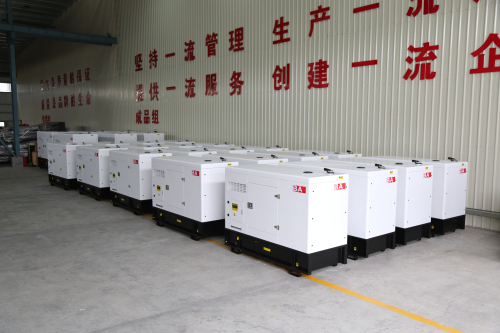
diesel generator set

Tuesday, December 1, 2020

What signage type is best for your business or event?


Finding the right sign can sometimes be hard and tiresome and may feel like you’re running in circles. There are so many different signage options out there ranging from LED neon signage to illuminated signage. In this post, we’ll help you find which signage type is best for your circumstance. Keep in mind that due to the nature of our signs being custom-made, a lot of what makes a sign suit its location depends on its design as well.


The first step in finding the right sign for your circumstance is figuring out your budget. The price of custom signage can vary dramatically depending on its size, material, and whether it has extra components such as a dimmer or RGB colour controller. For those on lower budgets, we would recommend non-illuminated metal signage which creates a very professional and polished look for a very low price. Our LED neon selection is also a good contender for low budgets, especially for simple designs like quotes and basic shapes. For higher budgets,we would recommend illuminated signage, which can be made out of acrylic or a selection of metals, and uses LED lights to increase its aesthetic look and bring even more attention to the sign as well as looking fantastic. Our LED neon also works well for higher budgets, as we do have a range of thicknesses, colours,and backing styles.


Secondly, you’ll want to know what objective you want your sign to have. Is it to sit in the background where you want it to look good but not want it to attract all the focus? For this we recommend LED neon which can be dimmed to a lower level as to not pull the attention away from the main subject in your display, but still look good when it is noticed. On the opposite side, would you like the sign to have all the attention? For this, we recommend our illuminated signage, which can be produced in any size and shape, as well as our LED neon set to its most powerful lighting option to deliver the greatest glow.


Thirdly, it’s important to know what type of material you want for your LED neon or illuminated signage. Our LED neon uses only one polymer material but comes in 18 preset colours. For those wanting more freedom with the colour, we also provide an RGB colour controller which will cause the neon to emit any colour you want it. We can also animate the neon for you to create an even more dazzling glow. If you want to go the Illuminated (and non-illuminated) Signage direction, we have a very extensive range of materials and styles to offer. Choose between Front-Lit, Back-Lit or Front + Back-Lit styles so you have freedom over where you want the light to emit from. For the surface material, we have an array of different finishes including Glossy, Brushed, and Matte, all with their own colour selections. Have a look at our Illuminated Signage page for more detailed information and inspiration. We can also provide custom finishes for our Signage range, such as a rusted effect or fairground cabochons.


Searching for the best signage for your circumstance can be hard, but with the right preparation and decisions, we can make it easy for you. For any enquiries about LED Neon or Illuminated Signage, please don’t hesitate to call us or send us an email for a response within 24 hours

Thursday, November 19, 2020

How to store antique ceramic Christmas trees?


Christmas is an annual festival commemorating the birth of Jesus Christ, observed primarily on December 25 as a religious and cultural celebration among billions of people around the world. Christmas Day is a public holiday in many of the world's nations, is celebrated religiously by a majority of Christians,as well as culturally by many non-Christians,and forms an integral part of the holiday season centered around it.

When talk about Christmas, it reminds me of Santa Claus and Christmas tree. And Christmas tree is used every Christmas,Today's article mainly talks about How to store antique ceramic Christmas trees.

Wrap them in some paper that doesn’t leak ink like newspaper does, and store them away from anything that could catch the packaging material on fire. A waterproof tote is good. If they were to be exposed to mold, it could stain them. Putting bubble wrap or cardboard between the wrapped items is also good. In fact, the blank face of cardboard makes a great wrapping material. Tape the container shut with duct tape to keep out insects and vermin and store them anywhere you’d like if they’re completely glazed ceramic.


If they’re painted ceramic, you have to be a lot more careful. Things that fired on glazes are impervious to can make paint peel off. In that case, you should wrap them in parchment paper and bubble wrap or cardboard over that, and keep them in a climate controlled environment. That’s also true if they have plastic or wax components.


Bubble wrap protects against shocks, but cardboard is better than it gets credit for if it’s cut and wrapped close around a piece.


We are professional company that specialized in designing, manufacturing and selling all kinds of high quality Ceramic Christmas Tree, The colorful ceramic tabletop christmas trees are sure to bring some added flair to your Christmas,and is full of winter charm! with LED light-It perfect for your nighttime display.It is also a perfect decoration for your house - or a gift for your matter friends!

Tuesday, July 28, 2020

Let's talk someting about the copper nut

Today let us talk something about the copper nut. The definition of a copper nut is a nut made of copper (usually lead brass, such as H59, H62). The copper nuts we come into contact with daily are mainly hexagon nuts or other copper nuts that match the bolts.

So why use copper nuts in daily production activities? Because the copper screws and nuts has the advantages of not being easy to corrode, anti-corrosion, easy heat conduction and strong conductivity, it is usually used for rust prevention, high temperature, and electrical conductivity, making it suitable for use in environments such as faucets, valves, and electrical switches.
Another main use of copper nuts is injection molding, which is embedded in plastic parts after heating or directly injection molded.
Brass has better high-temperature properties. For example, if a copper nut is heated and inserted, the embedded copper nut can quickly heat up and speed up the work efficiency. Instead, the heated copper nut can be quickly converted into plastic parts, so that the plastic holes The surrounding area becomes soft, which is conducive to pressing into the hole; then, what will happen if the mold is used for injection? The melting of PA / NYLOY / PET is above 200 ° C. The temperature of the copper nut is rapidly increased after it is hot melted into the plastic part. After injection molding, the plastic body is rapidly cooled and hardened. What will it be? You must have guessed how clever, the result is the place where the copper nut comes in contact with the plastic parts. This injection molding uses copper nuts instead of steel nuts.

BUSHING BEARING FAQ

Bushing bearing is a cylindrical mechanical part sleeved on a rotating shaft and is an integral part of a sliding bearing. Generally speaking, the Bushing bearing and the bearing seat adopt an interference fit, while the Bushing bearing adopts a clearance fit.
Concept
Bushing bearing is on the propeller shaft or stern shaft. The bearing is a component that fixes and reduces the load friction coefficient during the mechanical transmission process.
The sleeve and bearing are the same in that both bear the load of the shaft.
The difference between the two is that the Bushing bearing is an integral structure, and the relative movement between the shaft and the Bushing bearing is relative when rotating; while the bearing is split, the relative movement of the inner and outer rings of the bearing is relative when rotating. But in essence, the sleeve is actually a type of sliding bearing.
The bearing bush is equivalent to the outer ring of a sliding bearing. The bushing is integral and moves relative to the shaft, while the bearing bush is divided into pieces and the relative shaft is rotated.
In the LEGO Mindstorms series and BioTrans RoSys series robot components, the sleeve refers to the silver-grey LEGO standard shaft holder, which is divided into two types: full sleeve and 1/2 sleeve.
2. Maintenance
Common causes of failure
During long-term operation of the Bushing bearing, the surface of the shaft journal is subject to the pressing force of the expansion sleeve and the compound mechanical force, which will cause its permanent deformation and the diameter may be reduced by 0.1mm ~ 0.3mm. As a result, the mechanical expansion and contraction force can’t reach the required contraction force, and there is a fitting gap between the Bushing bearing and the main shaft, which causes the wear of the Bushing bearing.
Latest fix
Due to the greater value of parts, traditional repair methods are more expensive. With the development of advanced technologies such as foreign polymer composites, some repair methods that are fast and low in cost are favored. This method has also been introduced in China. The more mature materials are Fu Shilan 2211F. The material has comprehensive mechanical properties, excellent adhesion and temperature and corrosion resistance unmatched by traditional methods. The maximum compressive strength can reach 1200kg / cm2. The adhesion (overlapping shear test) is 225 on a smooth steel surface. kg / cm2. Therefore, it can be used to repair the wear of large Bushing bearings. And the equipment does not need to be dismantled in a large area, which saves a lot of manpower and material resources for the enterprise.
3. brass bushing bearing process analysis
Part technology analysis
(1) Part material: 45# steel. Good machinability.
(2) Component surface: outer surface (Φ50, 35, 33), inner surface (Φ31.5, 20.5), hole, end surface, inner and outer step surface, inner and outer retraction sipe, inner and outer Chamfer.
(3) Analysis of main surface: Φ20.5 inner hole is not only the supporting surface for supporting other parts, but also the main reference plane of this part; Φ50 outer circle and its stepped surface are also used to support other parts.
(4) Main technical conditions: The coaxiality of the outer circle of Φ50 and the inner hole of Φ20.5 is controlled in the range of 0.03mm; the perpendicularity of the step surface and the inner hole of Φ20.5 is controlled in the dimensional tolerance of the inner hole of Φ44 in mm; Roughness Ra0.8μm; heat treatment hardness HRC50  55.
Part manufacturing process design
(1) Blank selection: According to the material of the part is 45 steel, the production type is medium batch production, the diameter of the part has a large difference, the part has a thin wall, low rigidity and easy deformation, and the processing precision is high. The part needs to be quenched. In terms of factors, choose between bar stock and die forging: die forging.
(2) Benchmark analysis: The main positioning benchmark should be Φ20.5 inner hole center
(3) Installation scheme: when processing the big end and the inner hole, the three-jaw chuck can be directly used for clamping; the rough end can be used with the large end of the reverse jaw clamp, and the semi-finish and finishing small end should be equipped with a mandrel. , Axial clamping workpiece with Φ20.5 hole positioning. When processing the hole, you can use the indexing head to install, lift the spindle by 90º, and use the direct indexing method to ensure the 3 × Φ6 even position on the circumference of the part. For the four screw vias on the big end, a special fixture is used for installation: the large end face and the Φ20.5 hole are used as the main positioning reference, the hole is prevented from turning, and the workpiece is clamped axially.
(4) Part surface processing method: Φ20.5 inner hole, precision grinding is used to achieve the accuracy and roughness requirements; the outer circle and its step surface are processed by grinding; the remaining turning surfaces are processed by semi-finishing to meet the processing requirements; Mill on.
(5) Heat treatment arrangement: Because the surface of the die forging has crust, it will accelerate tool wear and passivation. In order to improve the cutting processability, the blank is annealed after the forging to soften the crust; the final treatment of the part is quenching. The wall thickness of the parts is small and easily deformed. In addition, the high precision of the part processing is required. In order to control the quenching deformation as much as possible, the quenching and tempering treatment is arranged after the rough machining for pretreatment.
4. Sleeve Inspection Details
1. Appearance quality The surface of the sample should be free of air bubbles, burrs, and deformation, with uniform material and no irritating odor.
2.Size
(1) The relevant dimensions tested with vernier calipers shall comply with the relevant technical and drawing requirements.
(2) After the Bushing bearing and the rotating shaft are matched, the rotor is vertically downward, and the bronze bushing bearing will not slide freely under the action of its own weight.
3. Heat and aging resistance test
(1) After the sample is subjected to a ball pressure test at 125 ° C / 1h, the indentation shall be ≤ 2mm, and no deformation shall be observed visually.
(2) After putting the sample in the oven at 120 ° C / 96 hours, visually inspect the Bushing bearing for no embrittlement or deformation.
4, fire resistance test
The flame retardant grade is VW-1. If it is burned with alcohol lamp for 15S, it should be extinguished within 15S.
5.Packing and marking
(1) The packaging shall be firm, reliable and safe to ensure that the product is not damaged during transportation.
(2) The supplier code and name, product name, product quantity, material code, quality inspection mark, production date, etc. should be indicated on the package. The marks should be clear and accurate, and there should be no mixing.
(3) In order to increase the traceability of the product, it is required to mark the production batch number in a prominent place on the outer packaging. The delivery lot number shall be indicated on the original certificate of the inspection certificate or inspection (experiment) of the product.
6. Content of harmful substances (RoHS directive)
If used for RoHS directive models, the materials should meet RoHS directive requirements.